
Drama, Dirty Play, and the Fight for a Fair Game
Every World Cup gives you a tournament and a story. This one gave us both in equal, chaotic measure. Between the goals, the goosebumps, and the four teams I fell hardest for — Japan, Norway, England, and Spain — 2026 was a tournament that made you question, more than once, whether the beautiful game was being allowed to stay beautiful.
The Villain of the Tournament: VAR
If this World Cup had a main antagonist, it wasn’t a player or a coach — it was a screen. VAR was everywhere, and it left almost every team with a grievance.
Iran had a stoppage-time goal against Egypt wiped out for offside in the build-up, denying them their first-ever knockout appearance. Brazil’s Vinícius Jr. had a goal chalked off against Scotland on a marginal foul call, prompting Brazil’s federation to formally write to FIFA demanding consistency. Egypt were left fuming after a second goal against Argentina was disallowed for an infringement all the way across the pitch, with their manager alleging pressure on the referee to keep the tournament favourites alive. Ghana were denied what looked like a clear penalty against England when Ezri Konsa caught an opponent on the knee and VAR stayed silent.
Then there was the Argentina–Switzerland quarter-final, where a brand-new “mistaken identity” rule saw a yellow card rescinded from one player and handed as a straight red to another for simulation — a genuinely bizarre passage of officiating that summed up the whole tournament’s uneasy relationship with technology. Fair enough, the accuracy has never been higher. But the emotional cost — goals disallowed by margins no human eye could ever see — left a lot of fans wondering if football had traded its soul for a millimetre of precision.

Norway's Fairytale
Of my four teams, Norway’s story was the purest joy.
Their first World Cup since 1998, and they didn’t just show up — they announced themselves, scoring more goals than anyone else in European qualifying and riding Erling Haaland’s brilliance all the way to their first-ever World Cup quarter-final.
Their exit against England was the kind of match that deserved to go on forever: 1–1 after 90 minutes, Norway hitting the woodwork, a disallowed goal for a push from Haaland, and ultimately a Jude Bellingham brace that broke Norwegian hearts three minutes into extra time. No shame in that. Norway leave this tournament as the dark horses everyone will be talking about next time.
England's Long Wait Continues (For Now)
England’s win over Norway sent them into the semi-finals for the first time since their run in 2018, powered by Bellingham refusing to let his team go out quietly. It’s the same old England story in some ways — grinding, nervy, resilient — but this generation, under Thomas Tuchel, finally looked capable of going all the way. They fell just short in the end, but a semi-final is nothing to be ashamed of.

Japan: So Close, Again
Japan’s tournament will sting the most for their fans. A 4–0 demolition of Tunisia was a highlight reel in itself, and goalkeeper Zion Suzuki — born in New Jersey to a Ghanaian father and Japanese mother — became one of the stories of the group stage. But the Samurai Blue’s cursed history with knockout football struck again: a 1–0 lead against Brazil evaporated, and a stoppage-time winner sent them home. Japan have never won a World Cup knockout match. That statistic is starting to feel less like bad luck and more like a wall they need to find a way through.
Spain: Champions, Through the Fire
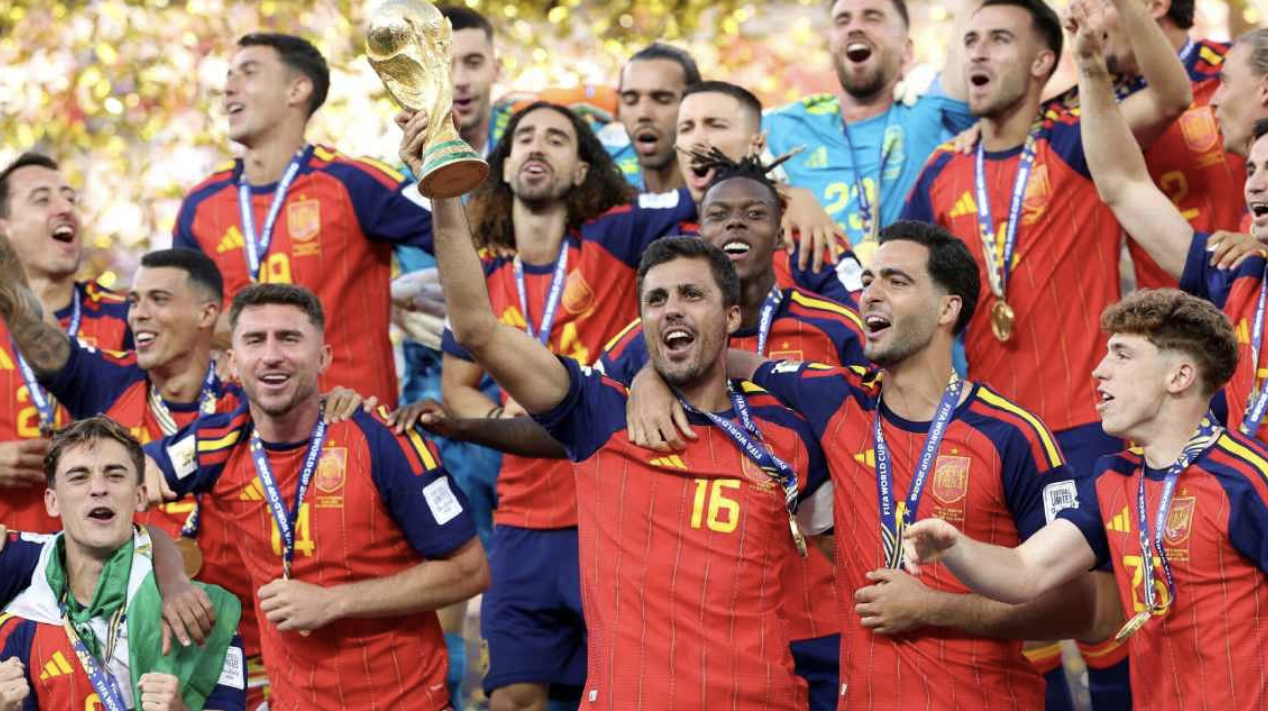
And then there was Spain, who went all the way. A contested penalty from Mikel Oyarzabal got them past France in the semi-final, and in the final itself, they edged out defending champions Argentina 1–0 after extra time — a match defined less by VAR (both checks were quiet, quick clearances) than by Enzo Fernández’s second-yellow red card, which turned the tide when Argentina were down to ten men. It was, fittingly, a final that came down to discipline and game management rather than a controversial reversal — maybe the fairest ending this tournament could have asked for.
Fair Football, Fought For
What struck me most watching this tournament unfold is how much effort it took to get a genuinely fair result. Every team — mine included — had a moment where they could point to a decision and say “that changed everything.” Some of that is the price of a game played at this speed and stakes. But there’s something to be said for the matches, like Spain’s final, where the outcome came down to the players’ own decisions on the pitch rather than a review on a screen.
That’s the World Cup I want to keep chasing: less controversy, more of the raw, real drama that Norway, England, Japan, and Spain all gave us this summer.